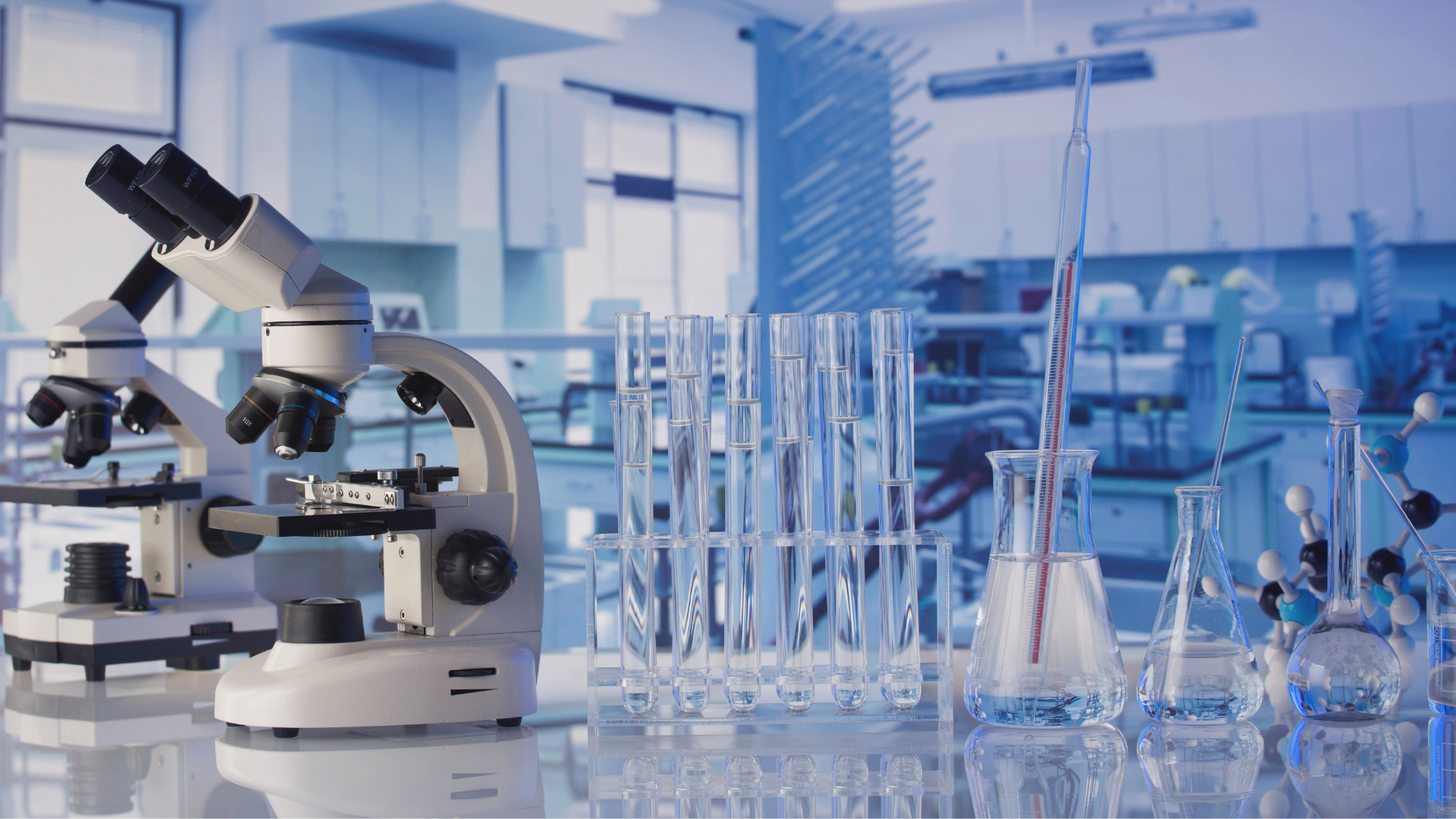

The Medical Laboratory Technology Associate of Science degree is designed to provide students with the knowledge, skills, and practical experience necessary to pursue a rewarding career in the field of medical laboratory technology. This program combines theoretical coursework with hands-on laboratory training to prepare students for entry-level positions in medical laboratories, hospitals, research institutions, and other healthcare settings.
Throughout the program, students will gain a deep understanding of the principles and practices of medical laboratory technology, with a focus on laboratory techniques, procedures, and instrumentation used in clinical diagnosis and research.
The curriculum covers a wide range of subjects, including medical terminology, anatomy and physiology, clinical chemistry, hematology, microbiology, immunology and serology, clinical microscopy, and laboratory management and quality control. In addition to classroom lectures, students will have ample hands-on laboratory training, where they will develop essential skills in sample handling, specimen processing, equipment operation, data analysis, and result interpretation. They will also have the opportunity to work with real patient samples under the supervision of experienced instructors.
Hands-on clinical experience is a vital component of the program, allowing students to apply their theoretical knowledge in real-world healthcare settings. Under the supervision of experienced professionals, students will engage in clinical rotations in hospitals and medical clinics. These clinical experiences provide an opportunity for students to refine their technical skills, develop professional ethics, and gain exposure to various specialties within medical laboratory technology. See if there is an existing externship site in your local area. (**Exact externship locations are based on site availability, not distance. Students often have to commute or travel to sites outside of their local area.**)
Program highlights:
Upon successful completion of the program, graduates will be equipped to pursue entry-level positions in various healthcare settings, such as hospital laboratories, clinics, public health laboratories, research institutions, and pharmaceutical companies. This program provides a solid foundation for further academic advancement, allowing graduates to pursue higher-level degrees or specialized certifications in areas such as medical technology, clinical laboratory science, or pathology.
96 credit hours required. All courses are 4 credit hours, unless otherwise stated
Program Core Courses
62 Credit Hours Required
MLT110 Introduction to Laboratory Practices
MLT115 Clinical Chemistry (5 Credit Hours)
MLT120 Hematology and Hemostasis (6 Credit Hours)
MLT205 Advanced Microbiology (5 Credit Hours)
MLT210 Immunology and Serology (5 Credit Hours)
MLT215 Advanced Clinical Chemistry (5 Credit Hours)
MLT225 Immunohematology
MLT297 MLT Externship I (8 Credit Hours)
MLT298 Career Development and Certification Preparation
MLT299 MLT Externship II (8 Credit Hours)
Required Electives
14 Credit Hours Required
BIO105 Microbiology with Lab (6 Credit Hours)
MED160 Healthcare Law and Ethics
MED273 Invasive Clinical Procedures
General Education
28 Credit Hours Required
Select 7 | At least 1 from each discipline required | 28 total credit hours required
Written and Oral Communication
ENG101 English Composition
ENG301 Oral Communication
Mathematics, Statistics, and Logic
LOG301 Thinking Critically
MAT101 Understanding Mathematics
MAT301 Algebra
MAT201 Algebra & Applied Data Analysis
Arts and Humanities
ETH201 Ethics
GEN301 Cultural Appreciation
Social and Behavioral Sciences
POL301 Political Science
PSY101 Psychology
PSY201 Human Growth and Development
SOC201 General Sociology
Physical/Natural Science
BIO201 Basic Anatomy and Physiology I
BIO202 Basic Anatomy and Physiology II
CHM105 General, Organic Biochemistry
For all courses: See course description for applicable prerequisites.


