
When most people think about healthcare careers, they picture doctors diagnosing illnesses, nurses caring for patients, or radiologic technologists performing imaging exams. What many people don’t realize is that behind nearly every diagnosis and treatment plan is another healthcare professional working quietly behind the scenes: the Medical Laboratory Technologist (MLT). They are an essential part of the healthcare system. They perform the testing that helps providers detect disease, monitor health conditions, and make informed medical decisions. From analyzing blood samples to identifying infections and verifying laboratory results, Medical Laboratory Techs play a critical role in patient care — even if patients never see them face-to-face. This program is perfect for the student that wants a career in healthcare but doesn’t want to be patient facing. For students interested in science, technology, and healthcare, MLT offers a unique career path with meaningful impact.
Laboratory testing serves as one of the important unseen facets of modern healthcare. As said by the American Society for Clinical Laboratory Science (ASCLS), Medical Laboratory professionals are “vital healthcare detectives.” Before a physician can diagnose an infection, monitor a chronic condition like diabetes, identify the cause of unexplained symptoms, or develop an effective treatment plan, they often depend on laboratory results to provide critical insights. While patients may spend only a few minutes having blood drawn or providing a sample, the testing that follows plays a significant role in guiding their care. From routine wellness screenings to complex diagnostic investigations, laboratory data helps healthcare providers make informed decisions with greater confidence and accuracy. Without the work performed in clinical laboratories, many of the diagnoses and treatments we rely on today would simply not be possible.
This is where Medical Laboratory Technologists make a meaningful impact. Working behind the scenes, MLTs analyze blood, urine, tissue, and other patient specimens using sophisticated laboratory instruments, microscopes, and testing technologies. Their role requires a combination of scientific knowledge, technical skill, and attention to detail, as even the smallest finding can provide valuable information about a patient’s health. In many ways, Medical Laboratory Technologists act as healthcare detectives, carefully examining samples for clues that may reveal infection, disease, nutritional deficiencies, or other medical conditions. By generating accurate and reliable test results, they provide physicians and healthcare teams with the information needed to better understand what is happening inside the body and determine the most appropriate path forward for patient care.
What patients cannot say, their body can, and medical lab techs help translate.
Medical Laboratory Techs perform a wide range of tests that help healthcare providers diagnose illnesses, monitor ongoing conditions, and evaluate a patient’s overall health. While many people associate laboratory work with routine blood tests, the reality is that MLTs are involved in analyzing many different types of specimens and conducting testing across several specialized areas of the laboratory. Each specialty focuses on a different aspect of human health, and together they provide a more complete picture of what may be happening inside a patient’s body. Below are a few of several that medical laboratory techs can enter into.
When many people think of laboratory testing, hematology is often one of the first areas that comes to mind. In hematology, MLTs study blood and blood cells to help detect conditions such as anemia, clotting disorders, infections, and certain blood diseases. They often examine blood samples under microscopes and use automated analyzers to measure and evaluate various components of the blood, looking for abnormalities that may provide important clues about a patient’s health.
Hematology testing plays a critical role in diagnosing and monitoring a wide range of medical conditions. Medical Laboratory Technologists who work in this area can be found in hospitals, physicians’ offices, and diagnostic laboratories, where they help provide the accurate results healthcare providers rely on every day.
This is the area of the laboratory that focuses on identifying bacteria, viruses, fungi, and other microorganisms that can cause illness. In microbiology, MLTs analyze patient specimens, grow cultures, and perform testing to help determine what type of infection may be present. They may also assist in identifying which antibiotics or treatments are most likely to be effective against a particular microorganism.
Microbiology plays an important role in helping healthcare providers diagnose infections and develop appropriate treatment plans. Some common places where MLTs may perform microbiology testing include hospitals, diagnostic laboratories, public health laboratories, and research facilities.
This area focuses on analyzing blood and other body fluids to measure substances such as glucose, cholesterol, hormones, enzymes, and electrolytes. In this area of the laboratory, MLTs perform testing that helps healthcare providers evaluate how different organs and systems in the body are functioning. The results can provide valuable information about a patient’s overall health and help identify potential medical concerns. Clinical chemistry testing is commonly used to monitor conditions such as diabetes, kidney disease, liver disorders, and heart disease.
Medical Laboratory Techs working in this department often operate advanced laboratory analyzers and computerized testing equipment to process large numbers of samples accurately and efficiently. These professionals can be found working in hospitals, diagnostic laboratories, and other healthcare facilities where timely and reliable test results are essential to patient care.
Immunohematology, often referred to as blood banking, focuses on ensuring patients receive safe and compatible blood products when transfusions are needed. In this area of the laboratory, MLTs perform blood typing, test compatibility between donor and patient blood, and help prepare blood products for routine procedures, surgeries, and emergency situations. Their work helps ensure that patients receive the correct blood products while reducing the risk of transfusion-related complications.
Because transfusions can be lifesaving, accuracy and attention to detail are especially important in blood banking. Medical Laboratory Technologists working in this specialty play a critical role in patient safety by carefully verifying results and following strict testing procedures. MLTs in immunohematology can often be found working in hospitals, blood banks, transfusion services, and other healthcare facilities that provide blood products to patients in need.
A typical day for a Medical Laboratory Techs is structured, fast-moving, and full of important details that directly support patient care. While no two shifts are exactly the same, and each of the aforementioned areas of work can have varying responsibilities, most MLTs follow a workflow that balances preparation, testing, analysis, and quality control.
A typical day can, but is not limited to, include, according to information from the Bureau of Labor Statistics:
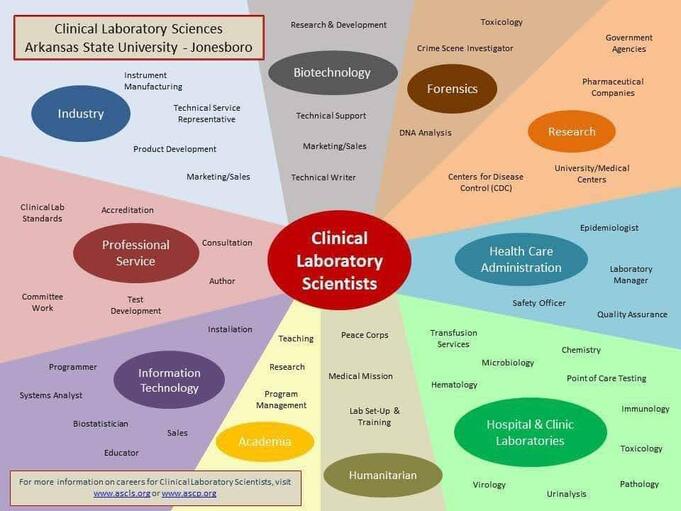
Check out this infographic from Laboratory Science Careers to see all of the different careers that can come from becoming a Medical laboratory technologist.
Medical Laboratory Technologists may work behind the scenes, but their role in healthcare is essential to every stage of patient care. Each day, laboratory professionals provide the accurate and timely test results that healthcare teams depend on to diagnose illness, monitor chronic conditions, guide treatment decisions, and improve overall patient outcomes. While patients may never see the work being done in the laboratory, the information generated there often plays a defining role in the care they receive. From routine screenings to urgent diagnostic testing, MLTs help ensure that providers have the answers they need when they need them most.
For students interested in combining science, technology, and healthcare into one meaningful career path, Medical Laboratory Technology offers a unique opportunity to make a lasting impact—one test, one sample, and one patient at a time. Through the Medical Laboratory Technology associate degree program at American National University, students can build the knowledge and hands-on skills needed to enter this in-demand field. The program is designed to prepare learners for real-world laboratory environments by introducing core testing areas, laboratory procedures, and quality standards that reflect current healthcare practices. Graduates are equipped to step into roles where precision, critical thinking, and attention to detail are essential—supporting healthcare teams and contributing directly to patient care through diagnostic science. If you’re ready to look for a future in this career field, visit American National University’s website: https://an.edu/programs/associates/medical-laboratory-technology-associates/
American National University – Be live, in class, from anywhere.