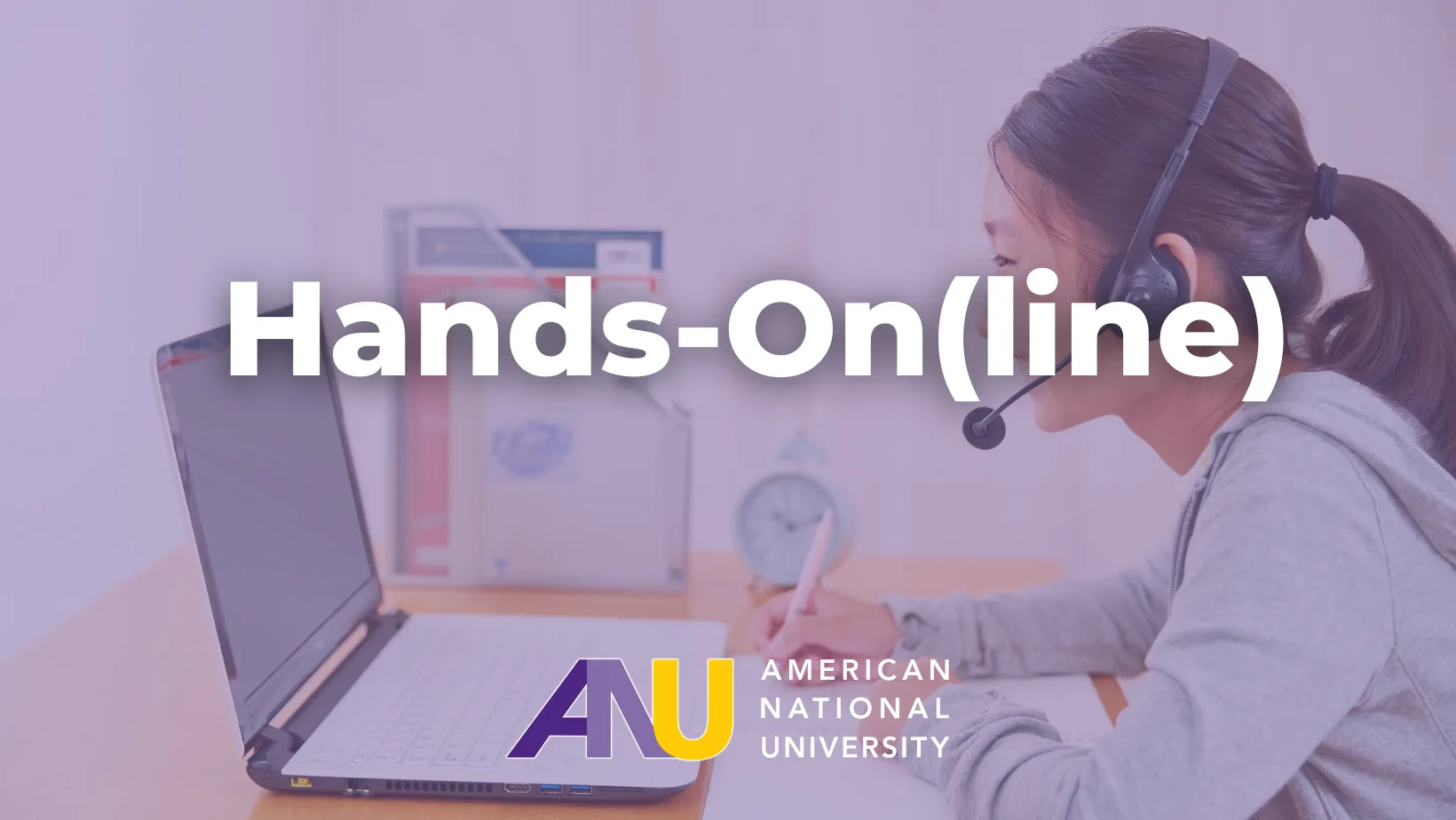

The idea of hands-on education brings forward images of kinesthetic learning, professor interaction, and knowledge built by hands along with the brain. This could be a classroom laboratory, healthcare simulations, or students working with specialized equipment they’d find in their field. However, those images do not typically populate when someone mentions education earned online. American National University is looking to change that thought with our Hands-On(line) approach to higher education. Students within the university can explore educational opportunities that combine online coursework with practical learning experiences. Depending on the program, these experiences may include technical projects, healthcare skills training, laboratory work, simulation technology, or clinical experiences. This allows all students, especially those who work and care for a family and other responsibilities, to gain an education that gives them the practical skills without having to sacrifice parts of their life to do so.
There exists an idea that online education means reading material and being tested on it without interaction outside of a book and exam. However, at American National University, that could not be farther from the reality. Students meet in live lectures with their professors and peers so that they gain a better understanding of the material presented to them in textbooks. Some activities may be completed remotely through digital tools or simulations. Others may require students to practice with equipment, attend scheduled skills sessions, participate in laboratory activities, or complete supervised clinical experiences at an approved location.
Each hands-on learning portion of American National University’s education varies for different programs. For IT, students have access to Amazon Web Services (AWS). For cybersecurity, students have access to VMware for ethical hacking experience. For health services students, lab kits that include blood pressure cuffs and phlebotomy arms are sent straight to their homes. Additionally, most health services programs require a clinical externship component to be completed at physician offices, hospitals, or pharmacies local to them.
Online learning does not have to mean learning without practical experience. With the right combination of coursework and applied activities, students can build knowledge while practicing how to use it.
Hands-on learning in an online environment can look different from one program to another. While some students may complete practical activities through technology, others may participate in in-person training or supervised experiences as part of their education. Here are some common ways online students can engage in hands-on learning:
At American National University, Hands-On(line) means students gain their education and practical skills from wherever they have an internet connection. While we have campuses in Virginia, Kentucky, and Tennessee, students do not have to attend classes in these buildings every day in order to earn their diplomas. With the different approaches of lab kits, access to High Tech materials, and Zoom conferencing sessions with professors, students get the fullness of an education without having to sacrifice their life, their collaboration, or their connections.
Choosing an educational program involves more than considering where classes take place. Students should also think about what they will learn, which skills they will practice, and how their coursework connects to their goals. Hands-on learning can be an important part of that decision. Whether a student is interested in healthcare, technology, business, or another field, understanding how a program incorporates practical application can help them make an informed choice.
American National University offers programs designed for students pursuing their educational goals while managing other responsibilities. As current student Elisa Landgraf said: “[American National University] is convenient, efficient. I save. How do you put a price tag on your time? It fits into a busy lifestyle. It makes it doable. It makes it something achievable, it doesn’t feel so far-fetched for a busy person, to somebody who’s already struggling and juggling a lot of things.”
Ready to learn hands-on while at home? Visit an.edu today to learn more.
American National University – be live, in class, from anywhere.

